

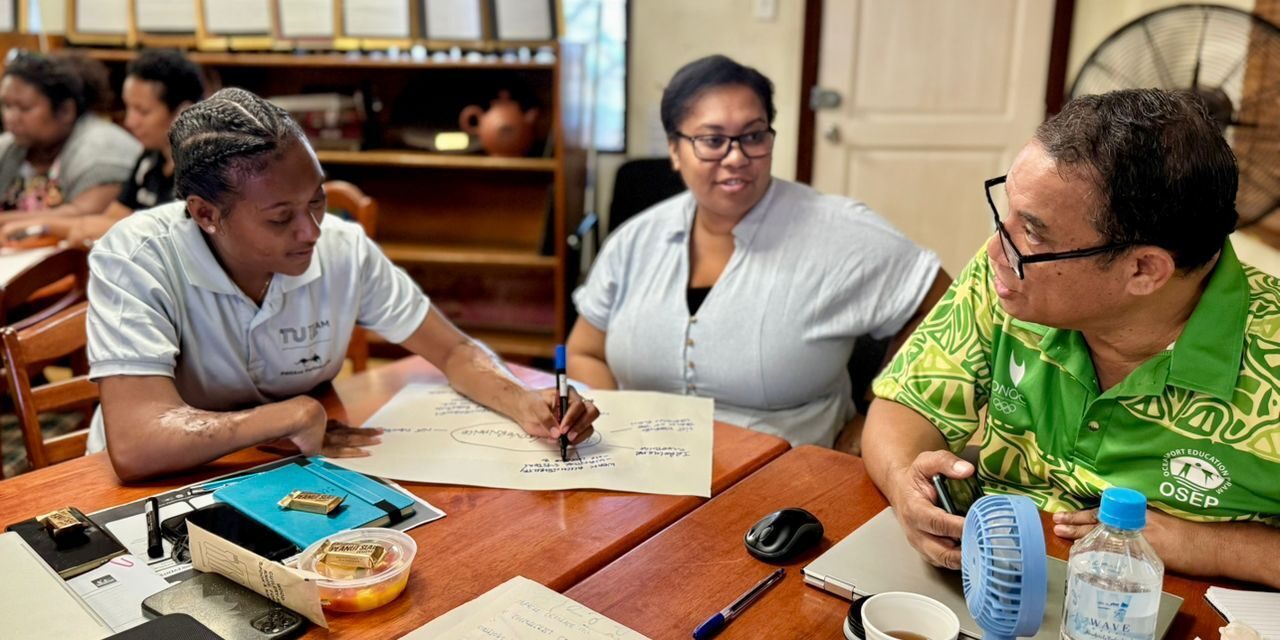
When the Badminton Papua New Guinea (BPNG) Executive Committee and emerging leaders gathered at the Papua New Guinea Olympic House on 25 April, it wasn’t business as usual. They became the first member association to pilot Badminton Oceania’s new Member Association Capacity Building Course (MACBC).
Developed over the past year, the MACBC strengthens how badminton is led, managed and governed across the region. Delivered during Badminton Oceania’s recent country visit, the programme’s inaugural face-to-face course was hosted by BPNG.
Why This Course Is Needed
Building the capacity and capability of member associations is a pillar of Badminton Oceania’s strategic plan. Strong national leadership underpins sustainable growth and helps ensure badminton continues to meet the needs of its communities.
Across the Badminton World Federation network and within national organisations, the message is consistent: sustainable growth depends on capable governance and effective management. Leaders need practical tools, shared frameworks and the confidence to make decisions that support development on and off the court.
That’s the purpose of the MACBC. Shaped with input from member association representatives, external consultants and Badminton Oceania staff, the course focuses on strengthening organisational leadership, management and governance.
A core principle of the MACBC is the use of local co-facilitators at each delivery. Their expert understanding of the national sporting landscape keeps the learning grounded, relevant and immediately practical for each member association.
The course is delivered across three modules, covering badminton as a global sport, development, and governance.
The First Face-To-Face Delivery
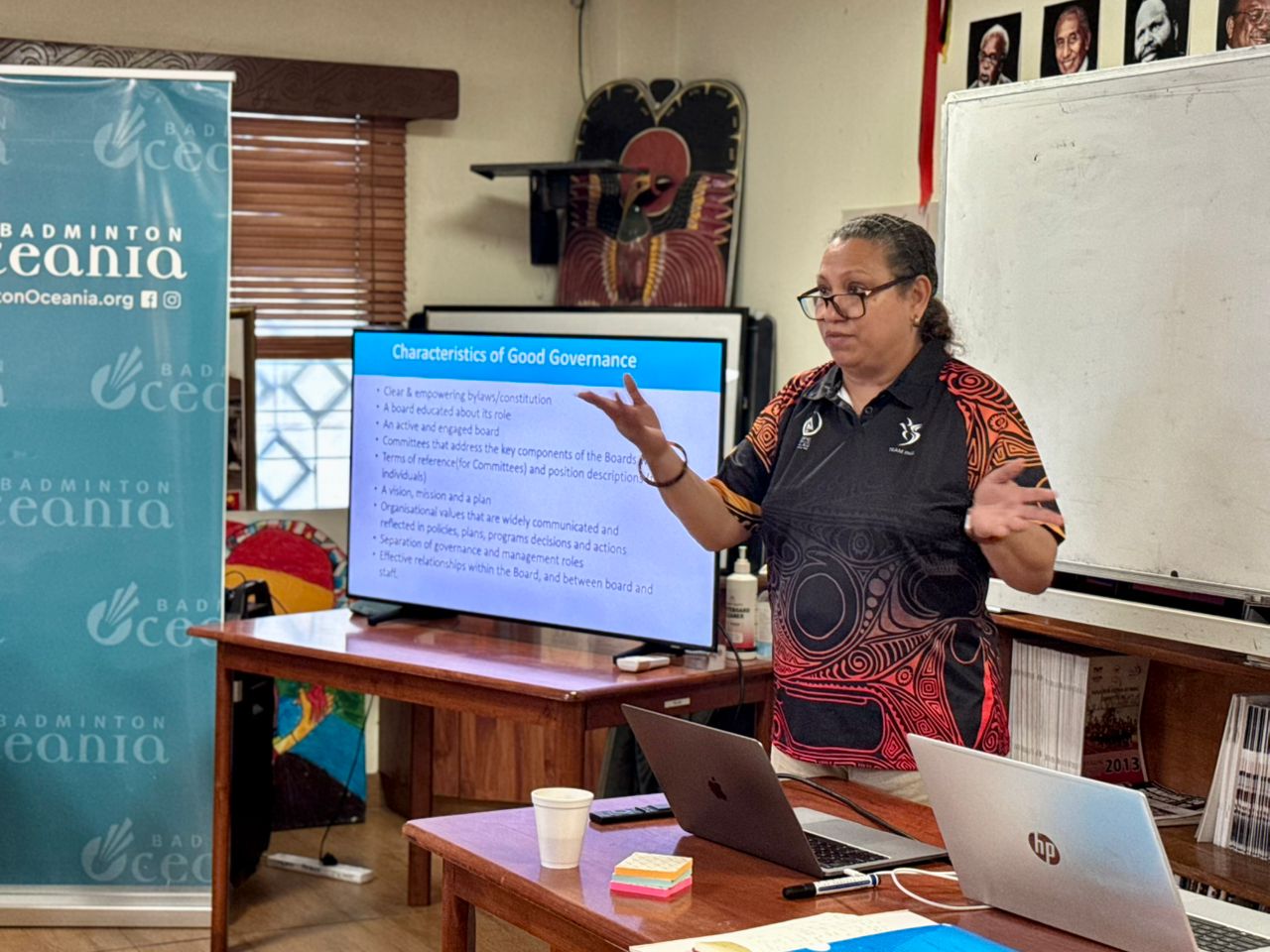
Auvita Rapilla, former Secretary General of Papua New Guinea Olympic Committee, co-delivered the course alongside Badminton Oceania.
Delivered by Sam Kreutzer, BOC Participation and Development Manager, during Badminton Oceania’s country visit to Papua New Guinea, the MACBC brought together the BPNG Executive Committee and a group of emerging leaders. Local co-facilitator Auvita Rapilla supported the programme, grounding discussions in PNG’s sporting context. A former Secretary General of the Papua New Guinea Olympic Committee and a current PNGOC Executive Committee member, she brought both national insight and international perspective to the room.
For BPNG, the timing mattered. With several members newly elected at last month’s Annual General Meeting, the MACBC arrived at a moment of transition; equipping new leaders with a clear foundation while helping longer-serving members step back, take stock and sharpen priorities for the season ahead.
That shift was reflected in the way participants spoke about their roles. For Ruthie‑Anne Badia—a medical doctor stepping into sport leadership with Badminton PNG—the sessions translated immediately into action.
“Trading the lab coat for a badminton racket at the workshop provided a healthy dose of inspiration for my new role as Vice President of Badminton PNG,” said Badia. “The sessions on development and governance offered a great diagnostic toolkit for sport, proving that precision is just as vital on the court as it is under the microscope. I’m walking away with a winning prescription for Badminton PNG and ready for action”
Looking Ahead
Badminton Oceania will continue working with BPNG to refine its operational plan through the remainder of the current strategic plan period, to the end of 2027. The committee has several weeks to progress the work begun during the course and will meet with Badminton Oceania next month to finalise the plan.
Capacity building initiatives like the MACBC play a critical role in strengthening badminton across the region, ensuring national federations are equipped to lead effectively and deliver sustainable programmes.
“These programmes equip leaders within national federations with the skills, knowledge, and confidence to improve governance, support athletes, and deliver sustainable programmes,” said Rapilla. “As a co-facilitator, it was encouraging to see Badminton PNG fully embrace this opportunity, demonstrating a clear commitment to strengthening their organisation.”
Following its successful debut in Papua New Guinea, the MACBC will next be delivered to the Tuvalu Badminton Federation Executive Committee this month, with a third Pacific-based member association scheduled to participate later this year.
As the MACBC rolls out across the Pacific, it signals a clear shift—from participation to purposeful leadership—within the region’s badminton community.