
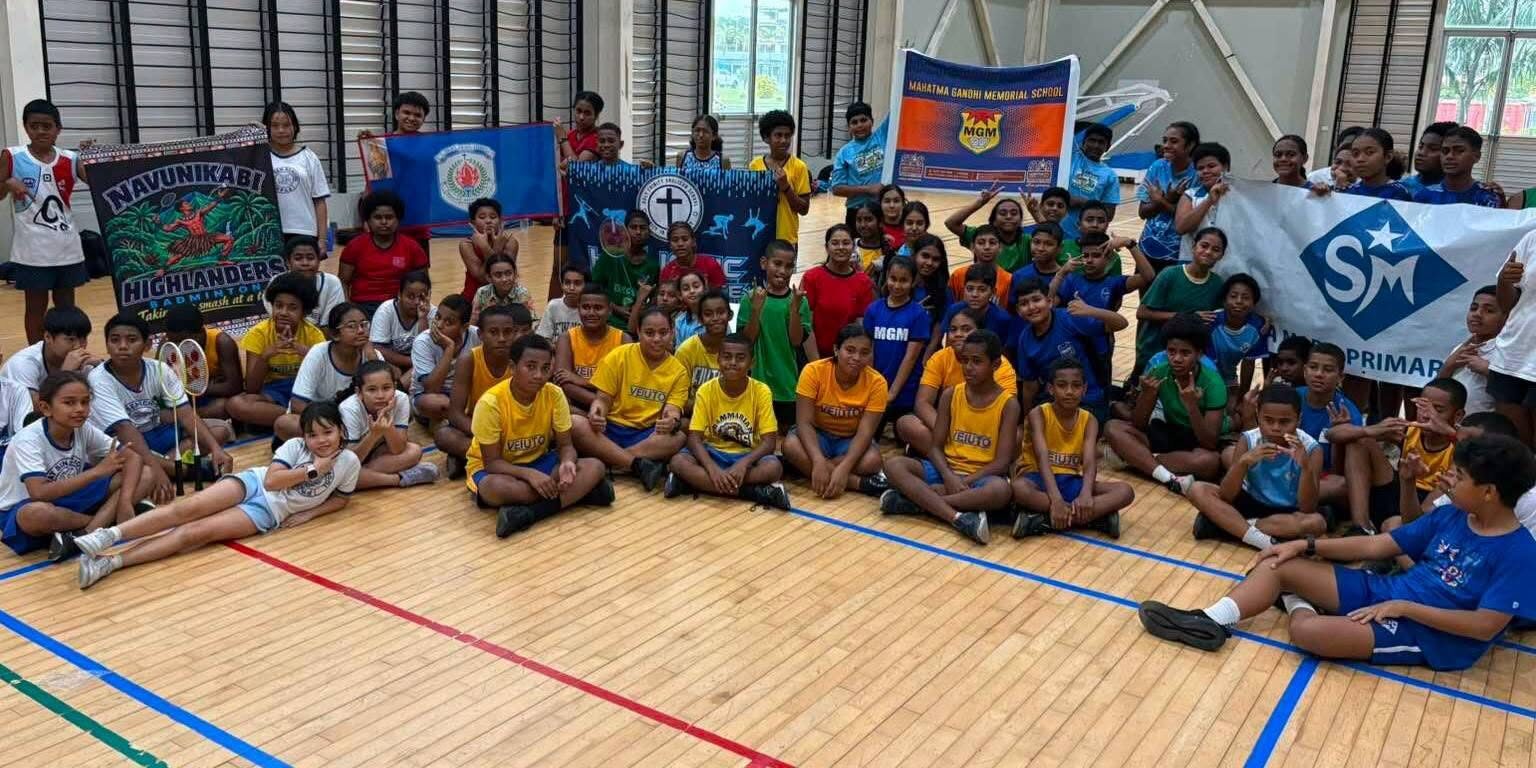
For the first time in its history, Badminton Fiji is running a dedicated national tournament for primary schools, and the response has taken even the organisers by surprise. Having initially hoped to attract around ten schools for the inaugural event, Badminton Fiji has landed 22 schools and more than 240 players, all set to compete at FMF Gym in Suva from 31 August to 2 September.
The tournament is part of a deliberate shift in strategy for the national federation, one built around fundamentals, the building blocks of long-term athlete development that start with getting rackets in the hands of with young children.
“In March we started reaching out to all the primary schools in Fiji,” said Abel Caine, Badminton Fiji President. At the time, secondary schools were already training on Tuesdays and Thursdays in the build-up to their own tournament (the 28th edition, held in May) and primary school sessions slotted in on Wednesdays and Fridays. Alongside the weekly socials for the community, the badminton community was once again buzzing.
“We had a beautiful arrangement,” Caine said of the scheduling. “For the first time in a very long time, it was five days of badminton happening a week, at least in Suva.”
Badminton remains a comparatively small sport in Fiji, competing for attention and resources against six or seven more established and better-resourced codes. Against that backdrop, the scale of the primary schools’ response has stood out.
“Knowing that there are so many more advanced sports in Fiji, it’s amazing how these headteachers particularly are so brave and adventurous,” Caine said. “This has been a wonderful surprise at the massive level of interest in badminton.”
What the Tournaments Are Building
Talking to students who took part in the high school competition makes clear what these tournaments are doing beyond the results sheet: building confidence, composure, and a sense of belonging in the sport.
One player described the difference a year of competition experience made. “Last year, I was very nervous, it was my first competition in badminton. In my singles game, I was so nervous I couldn’t stand still, my legs were shivering. My head wasn’t clear. I wasn’t sure of the physical or mental way to think properly, so I was everywhere,” she said. “This year I felt much more confident. I made friends with some other teams. I’m very proud of what I did this year.”
This type of growth—technically, mentally, and socially—is what Badminton Fiji is hoping to replicate at a younger age by giving primary school players their own pathway into competition, rather than waiting until secondary school for a first taste of tournament play.
An Eye on Tonga
For Badminton Fiji, both the primary and secondary school tournaments are not standalone events but part of a longer-term development pipeline. The federation sees the growing school competitions as a foundation for the national programme heading toward the 2031 Pacific Games in Tonga, with the hope that today’s nervous, wide-eyed first timers become tomorrow’s composed competitors on the regional stage.
With 22 primary schools and 240-plus players already on board for the first edition, and a secondary school tournament marking its 28th year, Badminton Fiji’s hoping the growth only continues across the country.