

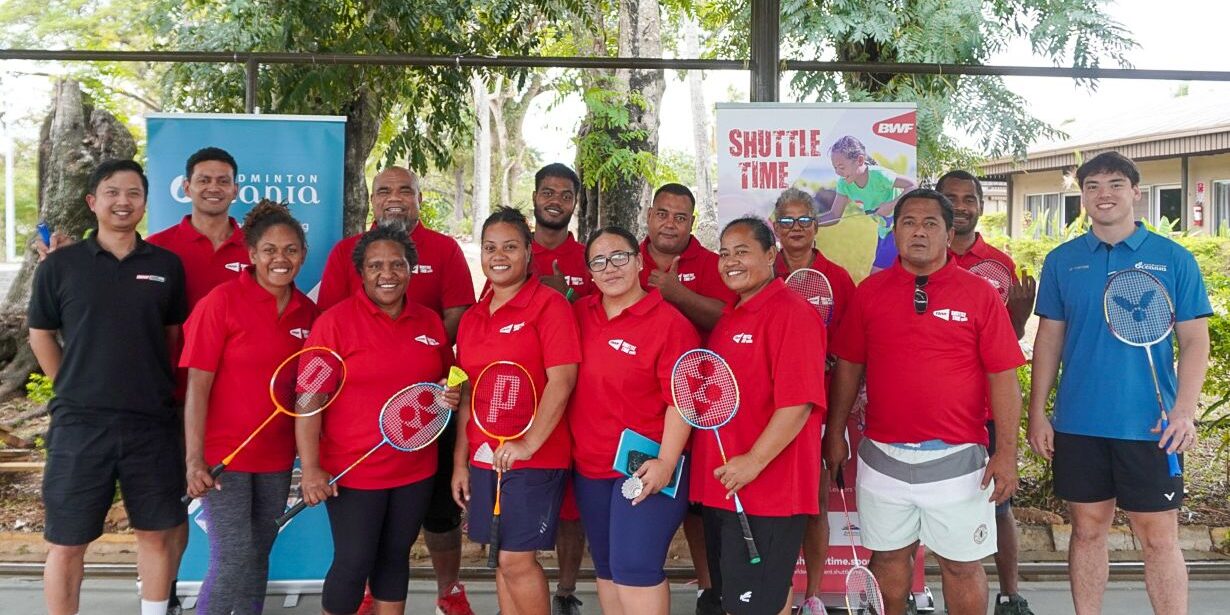
Badminton community members from Fiji, Samoa, Tuvalu, Vanuatu, Kiribati, Papua New Guinea, and Solomon Islands gathered in Fiji last week with a shared goal: to gain the skills and confidence needed to grow badminton in their communities back home.
Held at the Tanoa Skylodge Hotel in Nadi, 11 participants took part in a Shuttle Time Tutors Course, followed by the Badminton Oceania Pacific Foundation Coaching Course, equipping them with new knowledge, practical experience, and connections from across the Pacific.
For Tuvalu’s Essau Asela, the week represented more than just an educational opportunity.
It was the first time he had ever left his home country.
“I’m seeing the cars and taxis and buses going so fast here, we don’t have that back home!” he laughed.
Beyond experiencing life overseas for the first time, Essau was eager to learn how he could support badminton’s growth back in Tuvalu.
“I want to teach all the players back home to be like me, to play like me.”
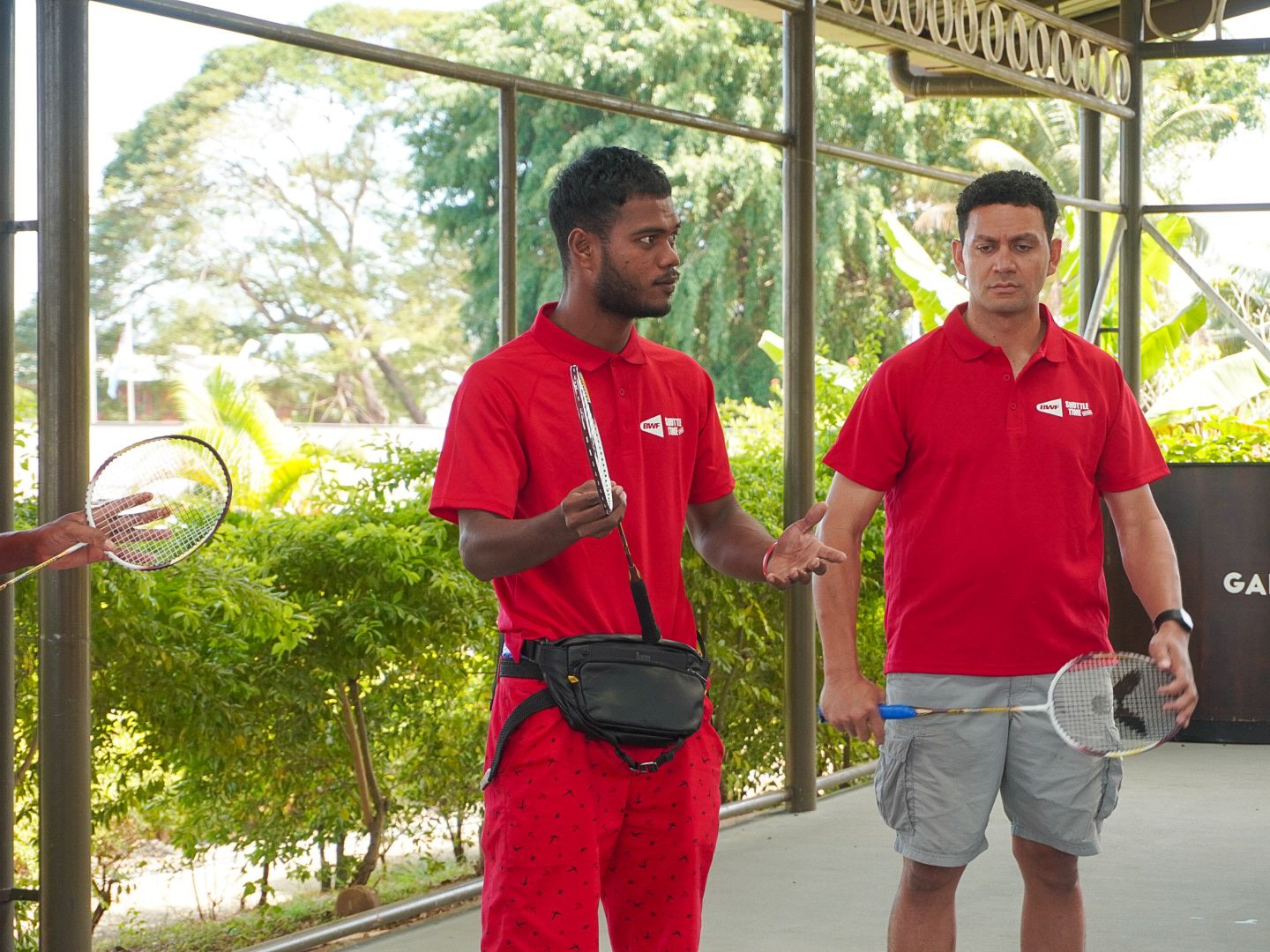
Essau explaining technical skills to other candidates at the Shuttle Time Tutors Course on August 14.
The Shuttle Time Tutors Course was facilitated by Badminton Oceania Development Officer and BWF Shuttle Time Trainer Dhanny Oud, alongside Participation and Development Manager Sam Kreutzer and Monte Tarawa.
Through a mix of classroom sessions and practical activities, participants learned how to train and support future Shuttle Time Teachers in their own countries.
Essau was joined on the course by high school teacher Ma’aola Sualo, who said one of the biggest benefits came from meeting and learning alongside participants from across the Pacific.
“In Tuvalu we are just starting, so hearing them telling us about how long they have been doing this is really ‘wow!’ We learned a lot from the team from Kiribati and Samoa, as they are a lot more experienced than us,” said Ma’aola.
She hopes to use those lessons to help badminton continue growing in Tuvalu.
“Our aim is to bring badminton up to the next level. We are hoping to encourage people to come to badminton,” she added.
While Shuttle Time has helped introduce thousands of young people to badminton across Oceania, many Pacific Member Associations have traditionally relied on Tutors travelling into the country to deliver Shuttle Time Teacher courses. By developing local Tutors, these Member Associations can now utilise expertise in-country to expand the programme within their own communities.
The importance of sharing success stories was also highlighted throughout the course, with participants taking part in a storytelling and media session delivered by Badminton Oceania Communications Manager Krystal Clark.
Following the conclusion of the Tutors Course, participants joined local coaches for the Badminton Oceania Foundation Coaching Course. The course was co-delivered by Dhanny Oud and Fiji National Coach Steven Low.
Designed to bridge the gap between introductory participation programmes and more advanced coaching education, the course introduced candidates to the fundamental strokes, tactics, and coaching principles of badminton.
For Papua New Guinea’s Rutha Omenefa, the course provided an opportunity to build her own confidence as a coach.
Travelling from Goroka in PNG’s Eastern Highlands, Rutha comes from a rugby league background but has become increasingly passionate about helping badminton grow in her local community.
“Badminton is newly introduced to my province. Once I train the Shuttle Time Teachers and they go out into their community and teach students, we can start identifying talents and work with them using the technical skills that I learned through the Foundation Course,” she said. “I see that there is a lot of growth and I’m really excited for it, not just in Goroka, but we will be able to branch out and help other provinces as well.”
By the end of the week, participants returned home with new skills, greater confidence, and practical tools to support badminton’s growth in their communities.
For some, that means delivering Shuttle Time Teacher and Youth Leadership Courses locally for the first time. For others, it means introducing new coaching methods, supporting more players, or creating new opportunities for people to get involved in the sport.
The courses may have finished in Fiji, but the lessons learned throughout the week will continue to be put into practice in communities across Fiji, Samoa, Tuvalu, Vanuatu, Kiribati, Papua New Guinea and Solomon Islands.
As Rutha reflected, “It is a great feeling knowing that I may be struggling in PNG but my brothers and sisters in the Pacific are also facing the same challenges and we can work together to overcome the barriers.”